Overstimulated, Touched Out and Done: A Mum's Survival Guide
It's 5pm, someone is singing the same six seconds of a song on a loop, another small person is hanging off your leg, the telly's on, the kettle's going, and you can feel your skin start to hum. That's not you being dramatic. That's overstimulation.
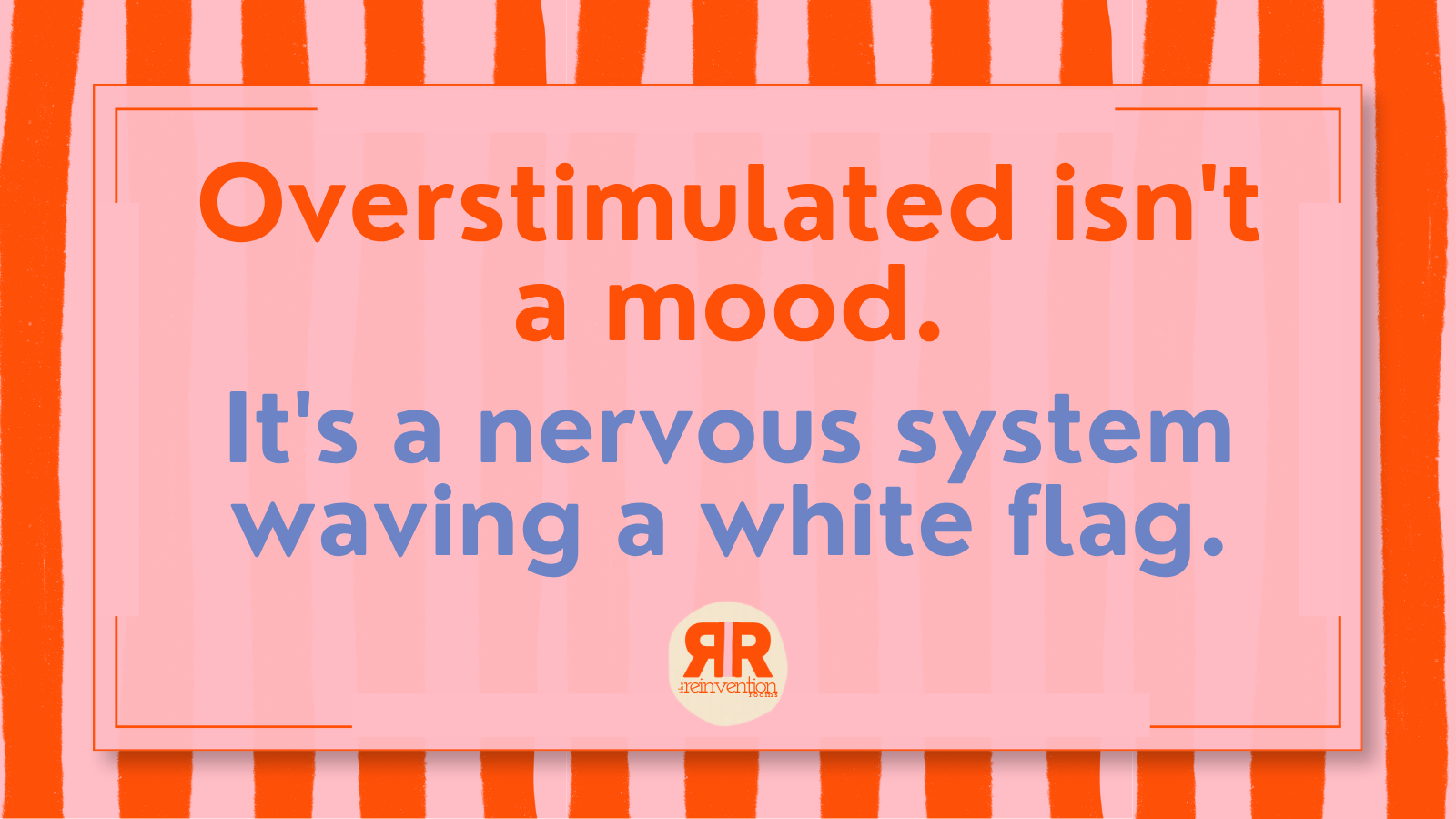
You love them. That's never been the question. The question is why, by the end of the day, you want to lock yourself in the downstairs loo and sit in the dark for nine minutes of nobody needing anything. That's not a character flaw. That's a nervous system that has taken more input than it can process, and is now politely asking everyone to back off.
Overstimulation isn't just being tired
Tired is fixed by sleep. Overstimulation is different. It's the sensory bill for a day spent absorbing noise, touch, mess, requests and background chaos with no gaps in between. The telly, the questions, the toy that sings, the hand on your arm, the second hand on your other arm, the thing on the floor you've asked them to pick up four times. Each one is small. Stacked, with no recovery between them, they tip you over.
And here's the cruel bit. The day doesn't even have to be bad. A perfectly nice day can leave you fried, because overstimulation isn't about how good the day was. It's about how much came in, and how little space you got to let any of it out.
Why the noise gets under your skin by teatime
By late afternoon you've been "on" for hours. Listening, refereeing, anticipating, holding the whole day in your head while also being touched, talked at and trodden on. Your tolerance isn't lower because you're weak. It's lower because it's been spent, drop by drop, since the alarm went off.
This is why the exact same sound that was fine at 9am makes you want to throw the singing toy out of the window at 5pm. Nothing's wrong with you. The tank's just empty, and nobody's let you top it up.
The touch thing nobody warns you about
You can adore your kids and still flinch when one more person climbs on you. Being touched out is real. When you've been a climbing frame, a comfort blanket and a human dummy all day, your body starts to crave the feeling of not being touched, the way you'd crave water. Wanting your body back for ten minutes doesn't make you cold. It makes you a mammal at capacity.
You're not touched out because you don't love them. You're touched out because you never get put down.
What actually helps (not a bubble bath)
You can't always cut the input. You can build in the recovery. Small, unglamorous, repeatable.
Lower the input you can control. Telly off when nobody's watching it. One sound source at a time. The hum in the room is a tax and you're allowed to stop paying it.
Take micro-solitude on purpose. Nine minutes behind a closed door, no phone, no scrolling, no jobs. Not a reward for finishing. A reset so you can carry on.
Name it out loud. "I'm overstimulated and I need ten minutes" teaches everyone, including small people, that this is a real thing with a real fix. It is not a tantrum. It is maintenance.
Protect the handover. If there's another adult, the first ten minutes they're home is yours, before the debrief, before tea. Walk out. Don't explain. Come back a person.
Take what you need
Overstimulation is a full nervous system, not a bad attitude.
Even a good day can fry you. It's about input, not how nice it was.
Being touched out is real and normal. Wanting your body back is human.
Lower the input you can, and build in tiny, guilt-free resets.
Name it. "I need ten minutes" is a full sentence.
You are not failing because the noise gets to you. You are a person at capacity who has been given no off switch. Let's find you one.

The six-week holidays are coming. The School Holiday Survival Guide is a free ten-minute reset to start.
Keep reading: The mental load is breaking you • Self care isn't a bubble bath